
Polar Coordinates in AP Calculus BC: Graphs, Area & Arc Length
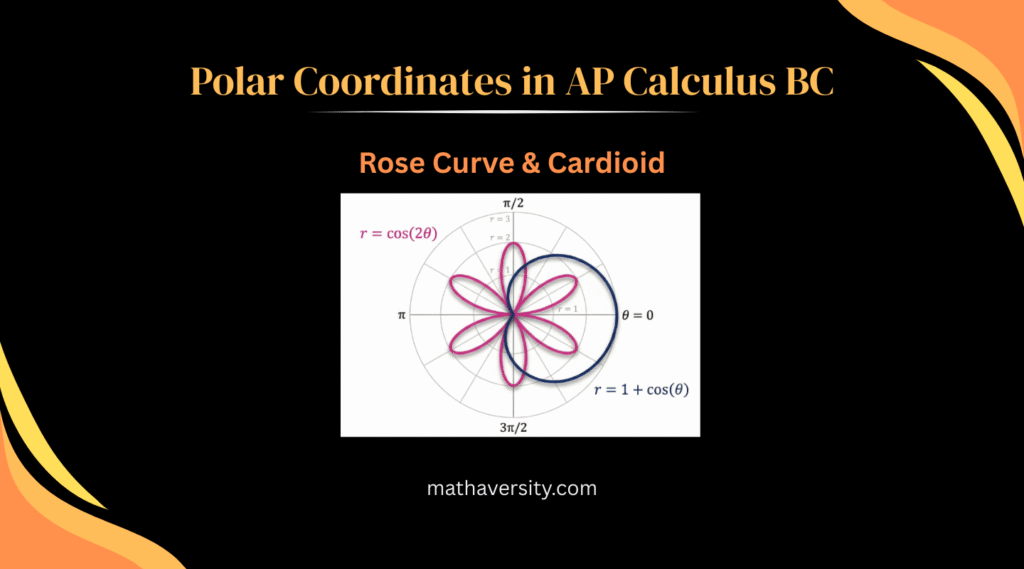
Introduction By describing points using a radius and an angle rather than horizontal and vertical distances, polar coordinates expand on the Cartesian coordinate system. A point in polar form is written as: where: = distance from the origin = angle measured from the positive -axis Polar coordinates are utilized in AP Calculus BC for arc […]
Two-Dimensional Vectors AP Calculus BC
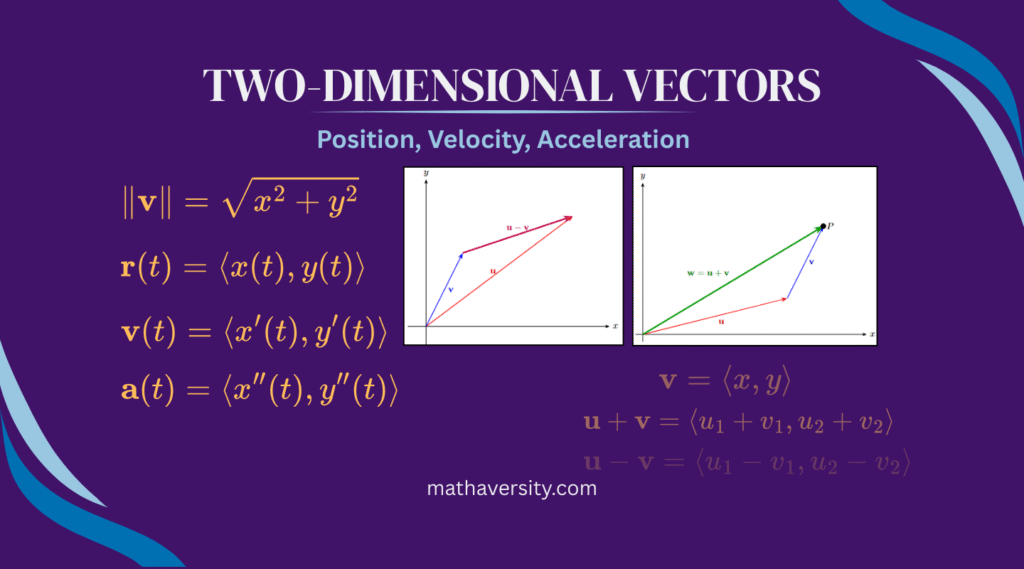
Introduction A conceptual grasp of motion is necessary to navigate the world of AP Calculus BC. Today, we investigate 2D vectors, which serve as a link between dynamic motion and algebra. Understanding vectors is more than just a requirement for the exam; it is the foundation for physics, engineering, and computer graphics. In this guide, […]
Parametric Curves in the Plane (AP Calculus BC) – Derivatives, Arc Length & Cycloids Explained
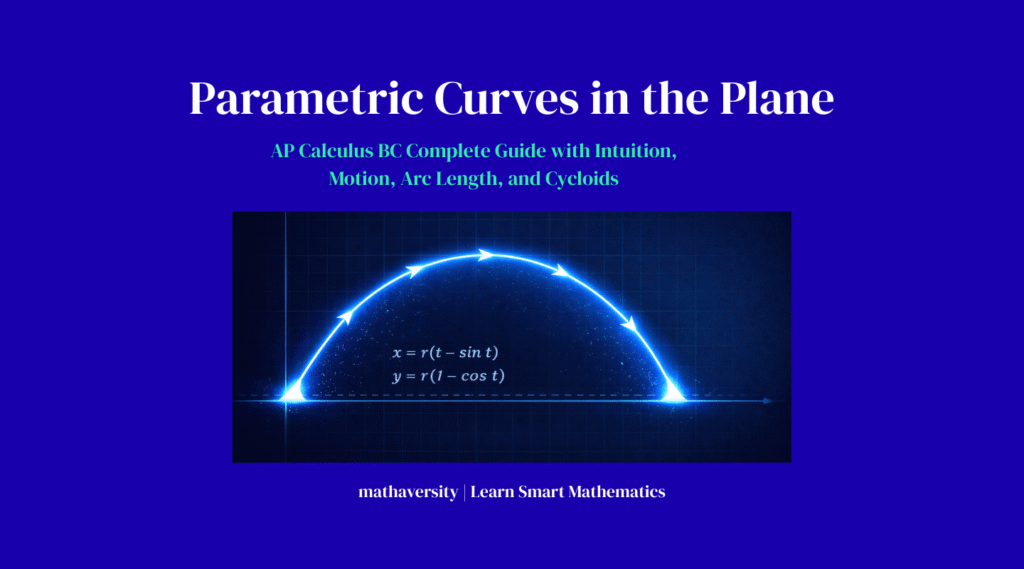
Introduction In standard algebra, curves are typically written as . However, many important curves in mathematics and physics cannot be expressed this way. For example, the circle: fails the vertical line test and therefore cannot be written as a single function . Why Parametric Curves Matter This restriction is overcome by parametric equations, which describe […]
Test for Convergence and Divergence – Complete Guide
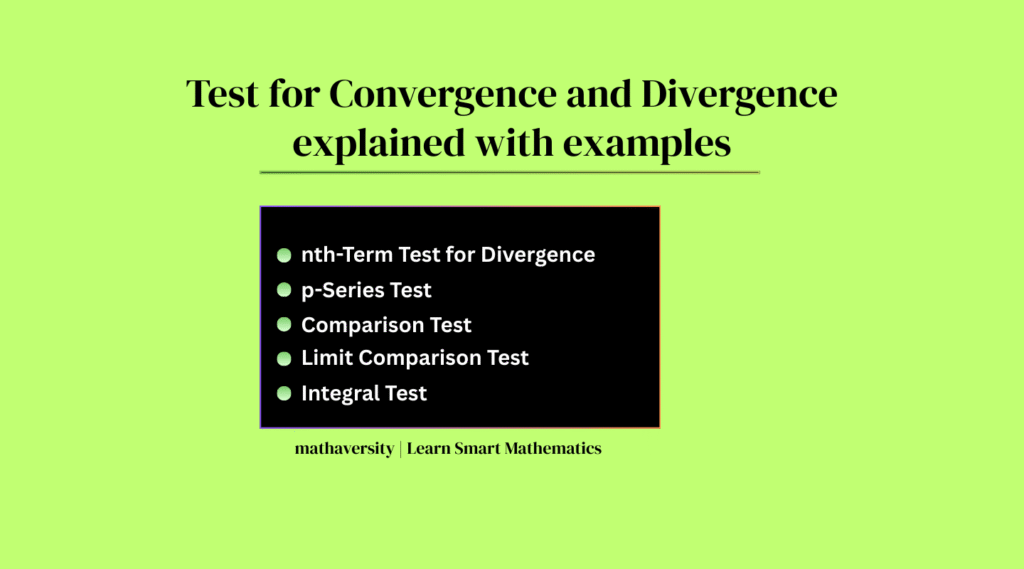
Introduction One of the most crucial topics in AP Calculus BC is figuring out whether an infinite series converges or diverges. Students can confidently solve multiple-choice and free response questions when they have a solid understanding of convergence tests. An infinite series is written as: The key question is: Does this infinite sum approach a […]
Should You Take AP Calculus AB or AP Calculus BC?

Introduction For high school students who are planning their academic paths, deciding between AP Calculus AB and AP Calculus BC can seem like a big deal. Both classes are at the college level and cover advanced math topics, but they are not the same. If you want to know things like: What’s the difference between […]